
Restaurants
Restaurant activities that actually last through dinner
A practical, screen-free plan for keeping a 3–8 year old happily busy from the moment you sit down to the moment the check arrives.
6 min read
A restaurant meal with a young child is really three separate waits: the wait to order, the wait for food, and the wait for the check. Each one has a different mood, and that is exactly why a single activity rarely covers the whole meal.
The trick is not finding one magic thing. It is having a small set of activities you can move through in a sensible order, so that when attention runs out on one, the next one is already sitting on the table.
Why four-minute activities feel like failures
A sticker sheet, a single coloring page or a puzzle book page each have one ending. Once the stickers are stuck and the page is colored, the activity is over, and you are back where you started — usually before the drinks arrive.
Activities that last have more than one thing to do inside them. A drawing surface you can wipe and reuse, characters that can be moved around a scene, a seek-and-find you can replay with a different target, a small challenge that can be made harder. Depth beats novelty, because depth restarts itself.
Sequence the meal in three parts
Save the deepest activity for the middle. This is the stretch where parents most often reach for a phone, and it is the one worth protecting.
- Arrival (5–10 minutes): something with an obvious beginning. Free drawing works because there is no set-up and no instructions.
- The long wait (15–30 minutes): the deepest activity you have. A scene to build, a story to invent with characters, a seek-and-find to run twice, a small game played with you.
- After eating (5–15 minutes): the quiet wind-down. Coloring, tracing, or finishing something started earlier.
Activities that hold up on a restaurant table
Notice what these have in common. They need no extra pieces, they cannot be spilled, and none of them are finished after one go.
- Draw the meal before it arrives — then compare the drawing to the real plate when it comes.
- Spot-and-count: find five round things, three blue things, two things that move.
- Story prompts: give your child two characters and one place, and ask what happens next.
- Menu bingo: choose four words from the menu and mark them off when you hear them.
- Wipe-and-replay challenges: draw a shape, wipe it, and see if they can redraw it from memory.
Set the table so the activity works
- Keep it to one compact item, not a bag of loose pieces that slide off the edge.
- Choose things that survive a splash of water and a dropped fork.
- Nothing with small parts that vanish under the booth.
- Nothing with sound, so you are not the table everyone looks at.
Where Beansie fits
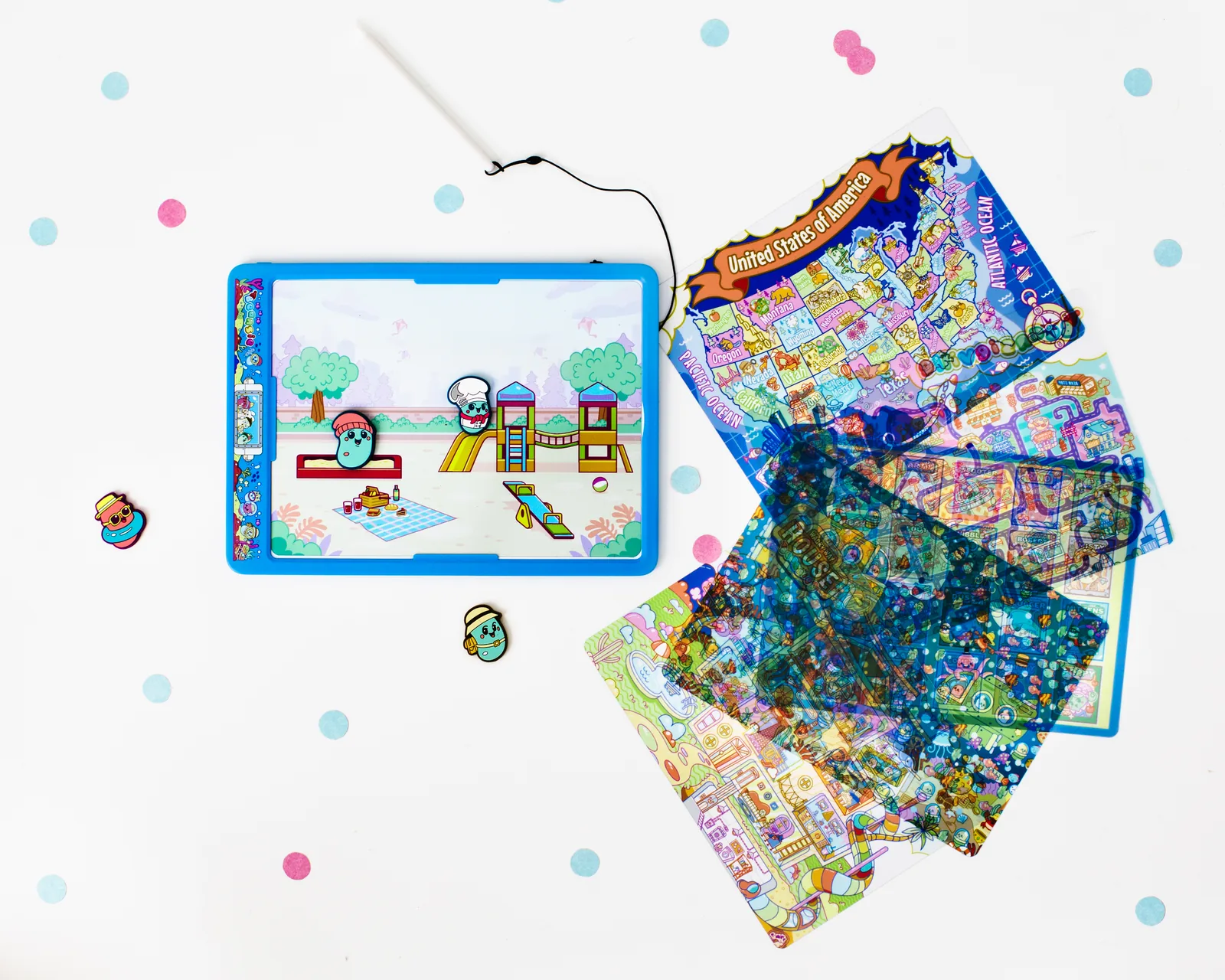
Beansie was built for exactly this stretch of time. One board, reusable activity sheets, dry erase drawing, magnetic characters and games — each sheet has roughly five to ten different things to do, so the same item covers arrival, the long wait and the wind-down without turning into a bag of clutter.
It wipes clean, it goes back in the bag in one piece, and it works again on the way home.
You do not need to entertain your child for the whole meal. You need a handful of activities with enough depth to restart themselves — and a plan for when to bring each one out.
Want one thing that covers all of it?
The Beansie Starter Kit is a reusable, screen-free activity system for ages 3–8 — drawing, activity sheets, magnetic characters, games and guided activities in one grab-and-go board.
Get the Starter Kit · $29.99